Start with the required finish
Tell us the metal, coating, condition, and what happens next: inspection, repair, welding, or recoating. A clean-looking surface alone does not establish coating readiness.
We use a scanned laser beam to remove rust, oxides, and selected coatings from metal surfaces. Targeted cleaning for various metals, equipment, and infrastructure—without blasting abrasive grit.
Plan your surface cleaning
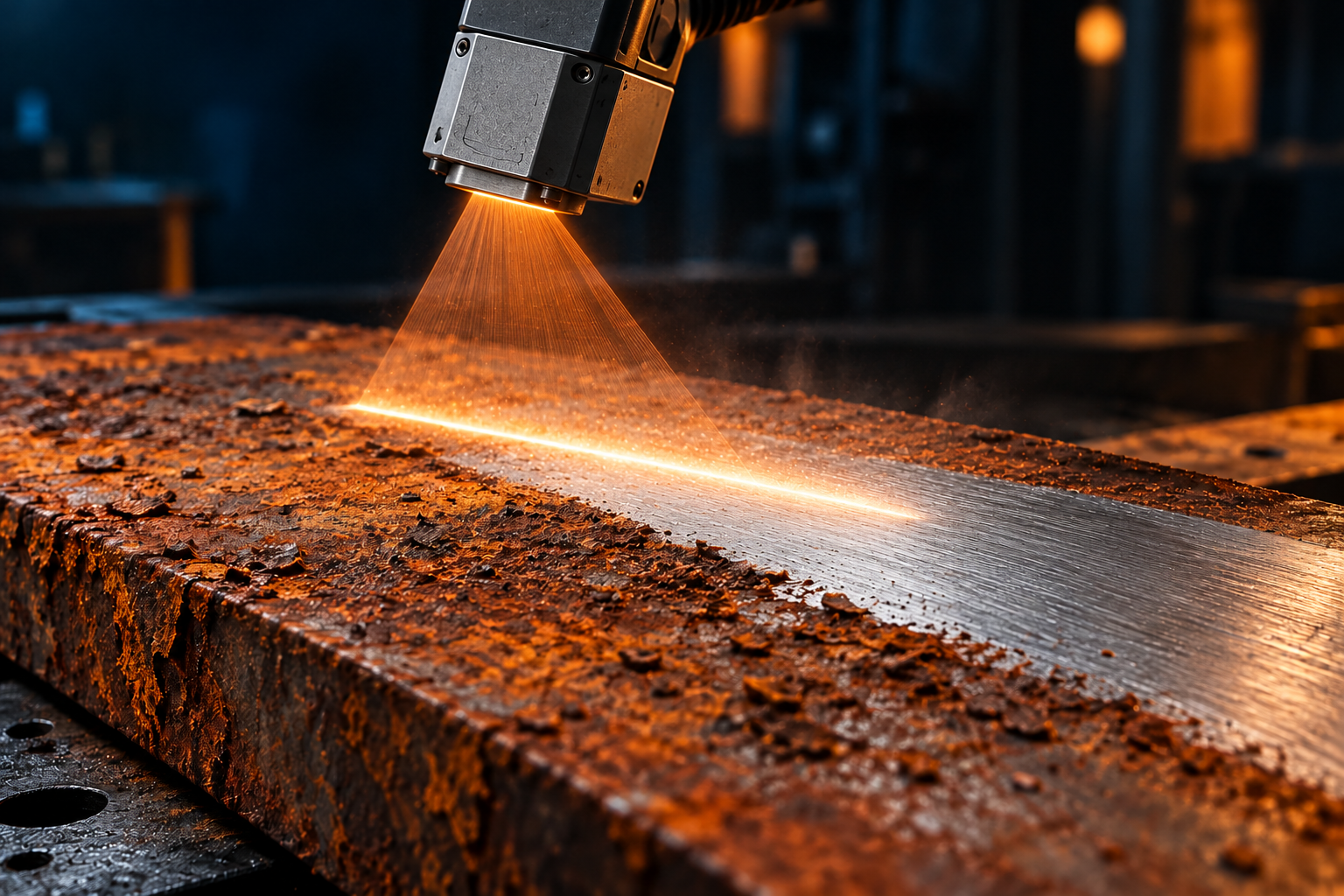
Our service uses laser energy rather than abrasive blasting. A hand-held cleaning head scans the beam across an accessible surface. The energy heats and removes unwanted surface material; extraction and site controls manage the resulting particles and fumes.
Tell us the metal, coating, condition, and what happens next: inspection, repair, welding, or recoating. A clean-looking surface alone does not establish coating readiness.
Agree on a representative test area, removal rate, acceptable finish, and heat effects before defining the production scope. Thin, heat-sensitive, and reflective materials need particular assessment.
Laser cleaning requires controlled access, beam and reflection controls, appropriate protective equipment, fume extraction, and site coordination. Removed coatings can still produce hazardous waste.
These are service applications, not three steps you must purchase in sequence. A project may involve corrosion removal, coating removal, surface preparation, or a combination.
Target corrosion on various metal components, machinery, and exposed metal. Assess surface condition before repair, inspection, or recoating.
Evaluate selective removal of paint and surface coatings. Define the substrate, coating type, and removal area before work begins.
Clean selected metal surfaces for the next stage of work. Confirm the required cleanliness and surface profile with your project team.
Blasting is an established, effective preparation method. Laser cleaning earns consideration when selective removal, abrasive-media cleanup, or protection of nearby equipment adds significant work to the blasting scope. A higher laser hourly rate only makes sense if the complete project benefits.
| Project consideration | Laser cleaning | Abrasive blasting |
|---|---|---|
| Where material is removed | A scanned beam can target exposed areas such as a weld zone, component, or local corrosion patch. Line of sight is required. | Abrasive impact cleans the exposed area. Nearby surfaces may need masking and protection from overspray. |
| Cleanup and waste | No spent abrasive grit to recover. Removed material, extraction filters, and collected residues still need assessment and disposal. | Spent media and removed material require recovery, handling, and disposal; some systems recover or recycle media. |
| Nearby machinery | Avoids introducing blasting grit around the work. Equipment still needs protection from beam exposure, reflections, fumes, and debris. | Media migration and dust can add protection and cleanup work around machinery and sensitive equipment. |
| Surface profile and recoating | Does not automatically meet a specified anchor profile or cleanliness standard. Inspection, testing, or additional preparation may be required. | Commonly selected to establish an abrasive profile for coating adhesion. Media and process must match the coating specification. |
| Production rate | Depends on coating thickness, corrosion, geometry, and finish. Multiple passes and heat management may affect output. | Often a strong fit for broad, accessible areas and heavy removal where production speed is the priority. |
| Material effects and work controls | Non-contact, but heat can alter or distort a substrate. A test area, laser controls, and extraction remain necessary. | Abrasive impact changes the surface. Containment, dust control, noise management, and suitable PPE remain necessary. |
For localized maintenance near equipment, compare the time and cost of abrasive delivery, masking, media recovery, waste handling, and cleanup. Removing those tasks from a suitable scope can offset a higher cleaning rate.
Large open areas, heavy buildup, or a specified blast profile can favor abrasive blasting. We assess the actual surface and finish rather than promise laser cleaning will always be faster or cheaper.
Ask for setup and access, demonstrated production rate, cleaning labor, containment or laser controls, extraction, waste disposal, cleanup, and final acceptance testing. Compare the total cost to deliver the required finish.
Technical background: IPG Photonics: laser cleaning and handheld cleaning limitations. Manufacturer examples describe their own systems; suitability and performance must be established for your project.
Industrial maintenance takes coordination. Access, operating conditions, containment, and shutdown windows shape the plan just as much as the surface itself.
Share the location, material, coating or corrosion condition, approximate area, and photographs.
Review access and finish requirements. A representative test area helps establish suitability and expected results.
Align the work area, site controls, schedule, and acceptance criteria before mobilization.
Based in Texas, with Texas and Gulf Coast project inquiries welcome.
Call Shane or William to discuss your surface cleaning project, site access, and schedule.